Foundation repair refers to the process of fixing or restoring the structural integrity of a building’s foundation.
Foundation repair can be complicated, and many people lack a comprehensive understanding of its mechanics. That’s why we have decided to throw our two cents in on this matter, so maybe we can help a few of those out there who may not have a complete understanding of the subject. Our aim is to provide answers to the following questions to help you gain a better understanding of foundation repair:
What is the definition of foundation repair?
What is the process involved in foundation repair?
What is the most effective approach for repairing foundations?
What are the causes of foundation problems?
Can foundation problems be prevented?
What is the price range for foundation repair?
We hope this article will provide you with the wisdom you need to make educated decisions about foundation repair when the time comes, and you need to either hire or do the work yourself of foundation repair.
1. What are the causes of foundation problems?
Before discussing the repair process, addressing the circumstances that led to the initial damage and the subsequent need for repairs is vital. The history encompasses factors such as the soil composition, weather circumstances, and additional considerations for prevention. Expansive soils undergo expansion and contraction in response to changes in moisture levels.
The molecules in the soil expand when wetted and contract when dry. The molecules are densely packed and exert pressure uniformly in all directions, similar to inflating a ball. However, they cannot exert significant pressure on the sides due to the tight packing. As a result, they exert greater upward pressure, with greater force, on the foundation of your home during rainy seasons.
Once the substance is no longer wet, it contracts and shrinks to a lower molecular level, causing your foundation to collapse. Continuously replicate this alternating pushing and falling phenomenon throughout the years.
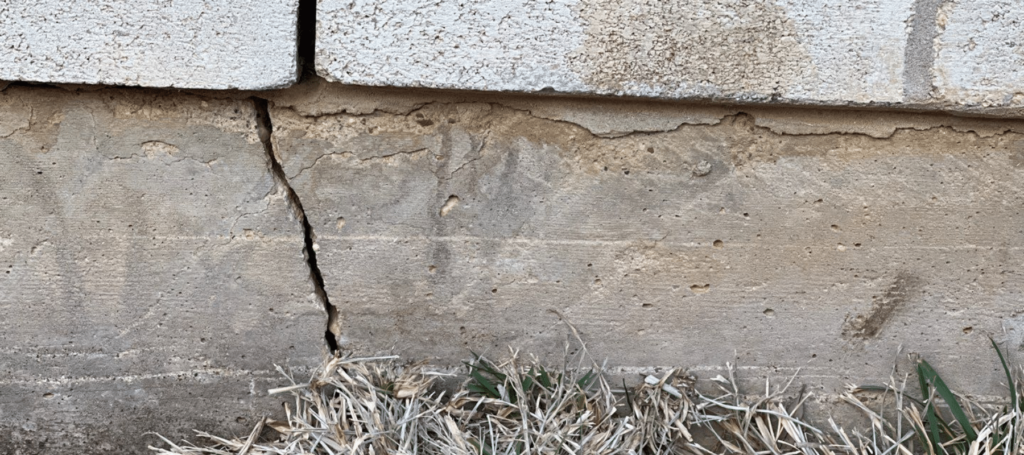
The powerful stresses exerted on your home’s foundation might cause it to deteriorate gradually and potentially shift from its initial position. This is commonly referred to as “settlement” in the industry.
The impact of expanding clay soils on your home can be likened to the effect of daylight savings time on your foundation, with periodic upward and downward movements occurring each year.
Weather Patterns
Foundation difficulties can be attributed to climate conditions. Due to the extreme nature of wet and drought seasons, soil typically exhibits varying characteristics. In a consistently arid climate, the expanding soils would not undergo expansion. In the event of constant moisture, the expansive soils would remain in an extended state. The ups and downs of climate inconsistencies pose a significant challenge for your foundation.
2. Is it possible to avoid these foundation issues?
Given our understanding of the consistent pattern in soil and climate, one can consider exerting control or taking preventive measures to avoid foundation settling. Indeed, it is possible that you could.
Although humans cannot manipulate or regulate atmospheric conditions. The weather will consistently alternate between heavy rainfall and prolonged periods of drought. Possibly, the only aspect that you can regulate is the moisture levels.
Certain home care sites suggest that you “moisten your foundation” to maintain consistent moisture levels. You may consider attempting this method. However, it would be quite challenging to sustain the same degree of moisture during all periods of dryness as experienced in times of drought. This approach may be more effective in certain climatic regions, but it is unsuitable for incredibly hot and dry regions.
Structural Problems
Our top recommendation is to water your landscape and grass around your home at their regular frequency to sustain their vitality but refrain from exceeding that amount. This will provide a moderate moisture consistency without significantly increasing your water use.
In the end, the formidable influence of broad clay soils and our climate will inevitably prevail over your modest endeavors. Therefore, it is not advisable to exert excessive effort to achieve an unachievable standard of consistently optimal moisture levels at all times to preserve your foundation. Ensure the survival of your plants and grass, as you would typically do.
3. What is the definition of foundation repair?
Having discussed the reasons for your foundation’s deterioration, we can now address its restoration. What is the precise definition of foundation repair? Essentially, a planned repair involves the installation of supports beneath the home, followed by elevating the foundation to its initial position and subsequent stabilization. To clarify, the process involves lifting and stabilizing the foundation.
Structural restoration services in the Brazos Valley region
Occasionally, this procedure is called “house leveling” or “foundation leveling.” Still, it is important to note that your home may not be perfectly level once the process is finished. The focus is mostly on enhancing performance, rectifying any issues with the foundation’s functionality, and returning it to its original constructed height, regardless of whether it was initially level.
4. What is the process of foundation repair?
The procedure of foundation repair involves several steps: plan preparation, installation of support, and lifting and/or stabilizing of the home.
Development of a plan
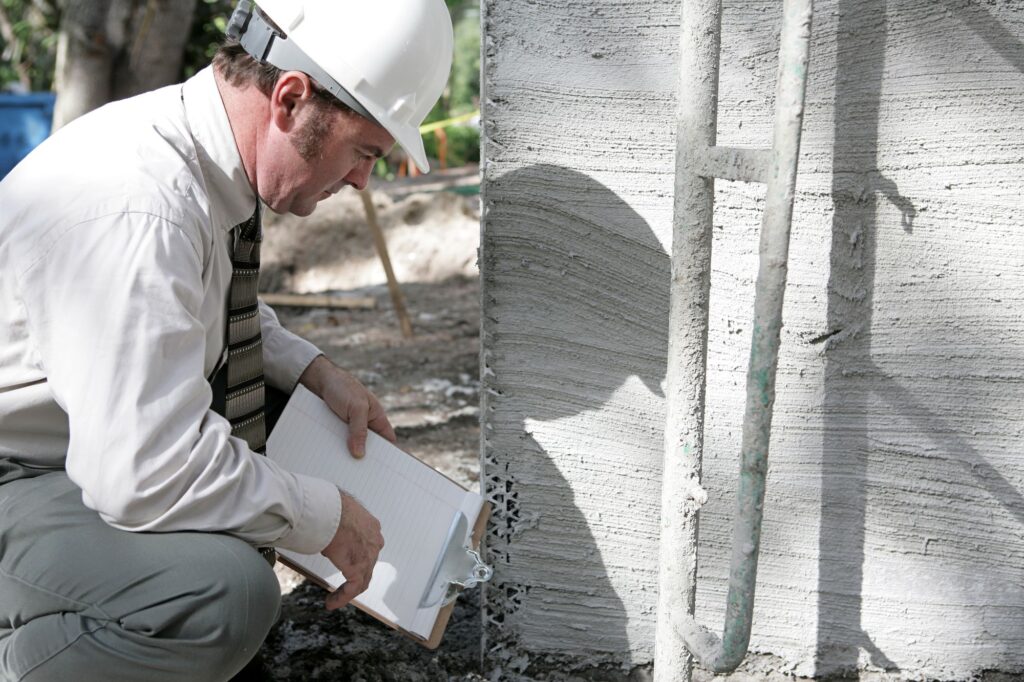
A crucial aspect of foundation repair involves formulating a well-defined plan. During an assessment, a foundation repair contractor usually formulates a fundamental strategy to identify areas in your property that require additional reinforcement to restore it to its former position.
Plan for Repairing the Foundation
The repair plan will determine the specific sites where the support will be positioned and the required number of support locations. Typically, the supports are positioned along a section of the perimeter rather than throughout the entire home.
Depending on the method used, support sites are typically 7 feet apart and positioned throughout the perimeter of the home. In around 10% of situations, additional supports may be required beneath the central section of the structure.
To obtain more comprehensive information regarding the planning phase during an on-site inspection, please refer to our article “Home Foundation Inspections: (Definition, Cost, Process).”
Installation Support (Two Categories)
In this part, we discuss the two primary types of support systems prevalent in our Central Texas region. Several alternative approaches exist, but their usage in this area is not prevalent.
In engineering terminology, the structural elements beneath your home are typically called “underpinning.” However, depending on the chosen approach, the specific names “piers” or “pilings” are more frequently used to describe the supports employed during foundation restoration.
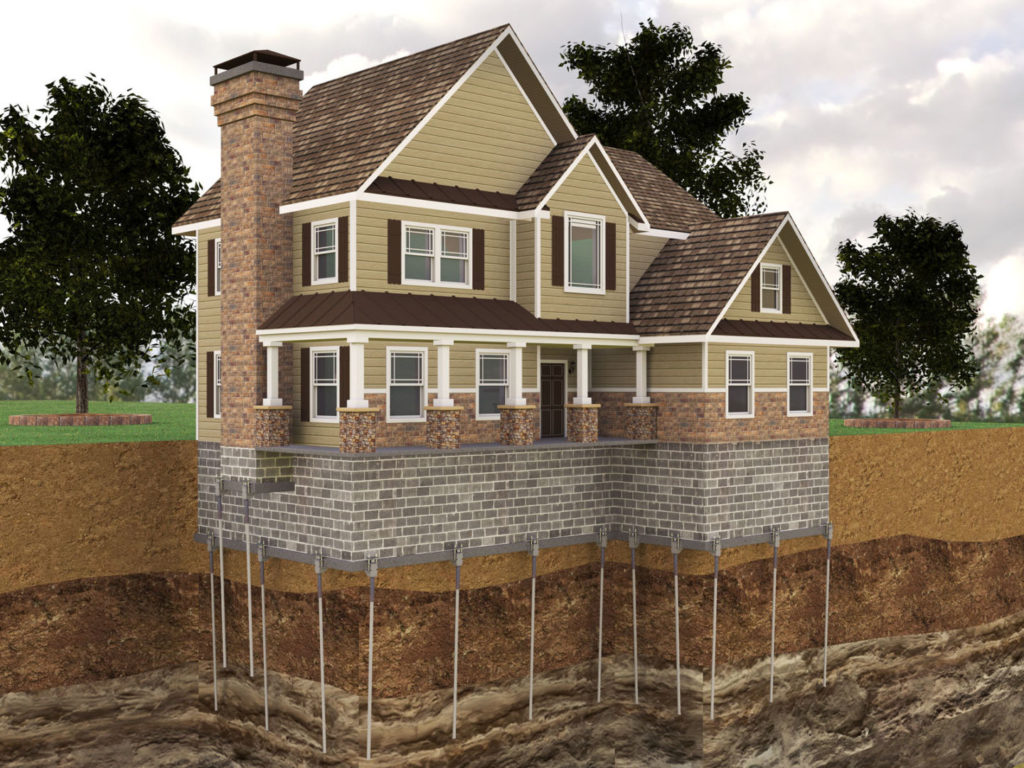
These piers, also known as pilings or piles, resemble tall and cylindrical columns typically found on the front porch of an elegant plantation-style home. Visualize the concept of subterranean stilts supporting your dwelling.
The supports are installed subterraneously by excavating and boring, followed by pouring concrete in the case of piers, also called bell-bottom piers. Prefabricated concrete elements are forcefully inserted into the ground using hydraulic pressure when employing pilings, also known as pressed piles.
Residential Elevation
Once the supports are installed in the ground, the foundation repair contractor will proceed to elevate the sunken sections of the home and confirm that the foundation has been restored to its initial height.
In the pressed pile method, the home is elevated due to the upward force exerted by the tension of the pile in the ground. This situation is somewhat analogous to inserting a battery into a device and securing it in position using a spring. The spring represents the ground, while the crushed pile symbolizes the battery.
The house is elevated using jacks, supported by a spring-like tension, and adjusted with shims to ensure height.
The support pier is an initial reference point for elevating the house in the bell bottom pier approach. The hydraulic jacks are positioned on the pier’s upper part to elevate the house to its correct position. Subsequently, shims are forcefully struck to establish the raised position of the residence.
Occasionally, there is no increase, only the act of stabilizing. ..In certain situations, the house may not be elevated back to its initial position, but instead, it is merely supported to maintain its current position. Stabilizing a home can mitigate additional movement, sinking, and damage, but it will not restore the home to its original position. What is the rationale behind the necessity of this task?
Stabilization is preferred over raising a property when it has already undergone remodeling with high-quality finishes that the homeowner wants to preserve without causing any damage. While raising a remodeled home, the structural adjustments may harm the recently renovated walls, trim, cabinetry or built-ins, as well as the countertops and backsplash areas.
Structural stabilization services in Bryan College Station
This is because all items were placed incorrectly when the residence was not properly positioned. Therefore, relocating the house will displace all the final construction and result in additional complications and repairs for the owners.
Typically, we strongly advise homeowners to prioritize foundation repair before proceeding with any other remodeling endeavors. To obtain additional knowledge regarding this topic, we provide an article entitled “Home Foundation Stabilization vs. Leveling: The Pros and Cons” for your reference.
5. What Is The Best Method For Foundation Repair?
The installation and raising process of foundation repair described above is much more detailed than the two methods, but those are the basic concepts. Each method, of course, has some pros and cons. Here are the main positive aspects of each repair type primarily available in our area.
Pressed Pile Method
Pros of the Pressed Pile Method
Quicker installation time
Lower cost
Bell bottom pier method
Pros of Bell-Bottom Pier Method
Higher quality: verified depth and vertical, wider base and cap, rebar reinforced
Longest lasting repair
If you want a deeper explanation of these two “underpinning” types, look to our article, “Bell-Bottom vs. Pressed Pile Foundation Repair Methods: What’s the Difference?” You will also find a more thorough outline of each repair type’s full pros and cons.
6. How Much Does Foundation Repair Cost?
That is always the biggest question and most difficult to answer in a general sense because every home is different. But we will try to lay it out for you here. A few factors will determine the cost of a repair.
Amount of Damaged Area
The more sections of a home that need support, the more supports will be needed for the repair. Most contractors begin their base charges with the number of piers/supports/piles needed under the foundation.
A very average job size would be about 15 to 20 supports needed on the home.
Accessibility of the Repair Points
The cost per support/pier/pile can increase depending on how easy it is for a contractor to reach the location. For example, if a sidewalk, porch, or other paved area prevents access to the support point, it might cost more. A deck is another item around your home that might cause accessibility issues but can be worked with.
To complete the repair, a repair team would have more work to do, breaking up and removing concrete or a deck section (and then replacing it). Supports needed in more difficult-to-access areas will cost 6 to 8% more per location.
Chosen Repair Method
As mentioned above, when listing each method’s pros, the pressed pile method comes with a lower price tag. By comparison, the bell-bottom pier method costs more per pier due to higher quality and longer-lasting repair.
The cost for one pressed pile might be within the range of $500 to $600 per pile.
In this area of the state, the price for one bell-bottom pier is in the $700 to $900 range.
Extra Services or Fees
Contractors all have their own way of setting up their fees. Some may charge extra for how far away your home is from their shop or available materials. Some may charge more if your job is more difficult or takes longer.
Extra finishing services or clean-up costs may also add to the pricing structure. So, in addition to any per-support pricing, there may be other line items on your invoice for an overall service total.
How much does foundation repair cost ?
General Price Ranges
So in taking all of these factors into account. ..here’s the moment you have been waiting for. On a very average foundation repair job of 15 to 20 supports, an estimated price range between $9,000 and $18,000 would cover all the pricing factors of accessibility challenges, repair methods, and additional service costs. Remember again that this is general pricing for our area of Texas.
7. How Do I Know For Sure If I Need Foundation Repair Or Not?
The prospect of foundation repair can be a confusing and overwhelming situation. You’ve got many factors to consider about methods and costs, as well as when you should do it and how you can pay for it. One question we haven’t answered for you yet is about making sure you really have a problem. How do you know for sure if foundation repair is needed or not?
Foundation Problems
The best way to judge whether you need foundation repair is by reading the signs around your home and getting in touch with your feelings. Yes, I said that. There are signals around your home that may or may not be the result of foundation movement. You want to be sure of both the true and false signs of foundation issues.
So, you’ve got some of these things going on in your home, but how do you feel about them really? Are they bugging you incessantly? Do you feel anxious or embarrassed by these visual cues? Does your OCD get triggered every time to pass by that wall crack? If the answer is “yes” to any of those questions, it might be time to start.
Should I Get Started With Foundation Repair Right Now?
You’ve reviewed the general causes, process, methods, and cost of foundation repair and then confirmed some signs around your home. Do you feel ready to move forward?
Questions about Foundation Repair
At Concrete Foundation Repair, we serve as the voice of trust for all your foundation repair questions and needs. We have repaired 4,000+ homes and inspected at least triple that number all over the US and Canada and are ready to help you through this time of uncertainty.
We place the highest importance on your comfort level and want you to feel great and be knowledgeable about your foundation repair decisions. Foundation damage occurs over long periods, so there’s no emergency in most cases.
The way we would answer your next questions is to answer one question at a time for these. So yes, there are some reasons not to wait on your foundation repair work to consider before you decide what is right for you and your home.
Send us an email or fill out one of our forms. We will be happy to hear from you!